
1. Introduction
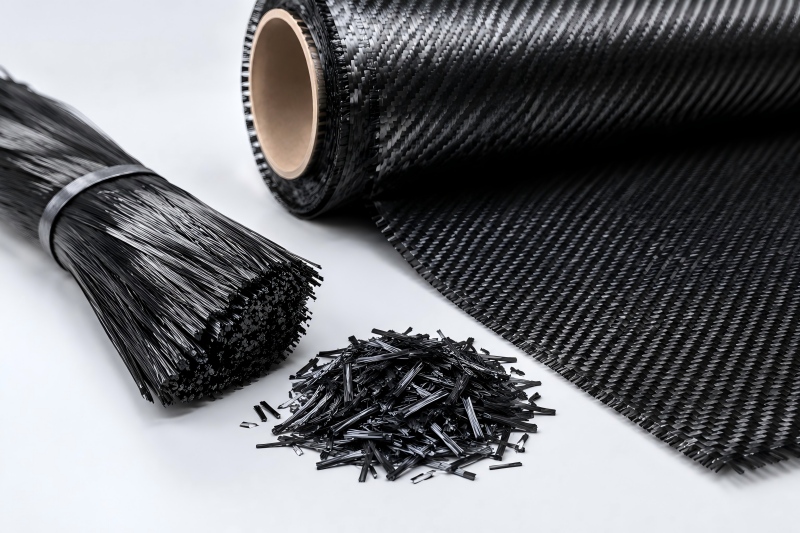
Carbon fiber is a high-performance material primarily composed of carbon. It is characterized by high strength, high modulus, low density, and excellent corrosion resistance. These properties make it widely used in aerospace, automotive manufacturing, composite materials, energy, and advanced engineering applications.
In carbon fiber quality control and material analysis, metal content is an important parameter. Determining the concentrations of various metals and inorganic elements provides valuable data for material characterization, impurity control, and product quality evaluation.
However, carbon fiber has a relatively stable chemical structure and a distinctive fibrous morphology. Its sample preparation requires careful consideration of the acid composition, digestion temperature, and reaction conditions. Conventional pretreatment methods may involve lengthy processing times and inconsistent digestion efficiency.
Microwave digestion uses controlled heating and pressure in a closed system to promote reactions between samples and digestion reagents. This technique can improve sample preparation efficiency while helping reduce the risk of contamination from the external environment.
In this study, the Welso WMD600 Microwave Digestion System was used to investigate digestion conditions for different types of carbon fiber samples. By adjusting the acid systems and digestion programs, the digestion performance was evaluated to develop suitable sample pretreatment methods for subsequent metal element analysis.
2. Instruments and Reagents
Instruments
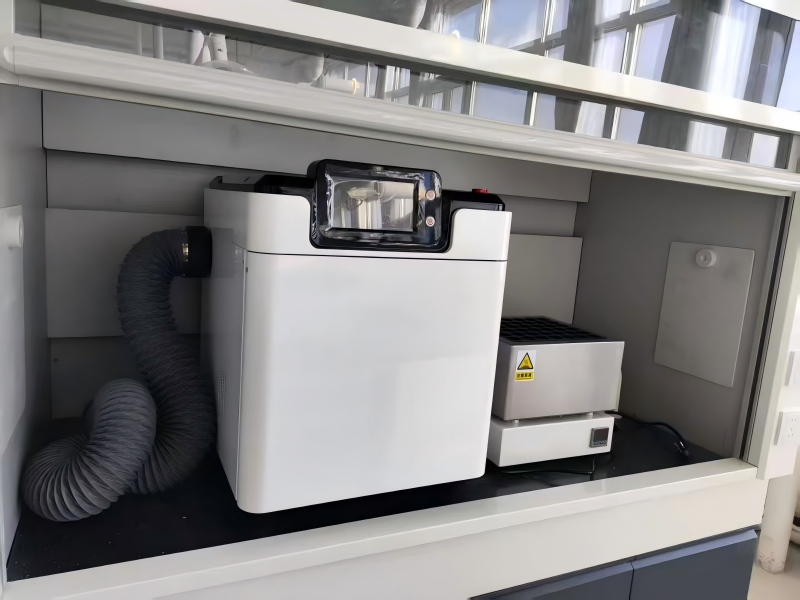
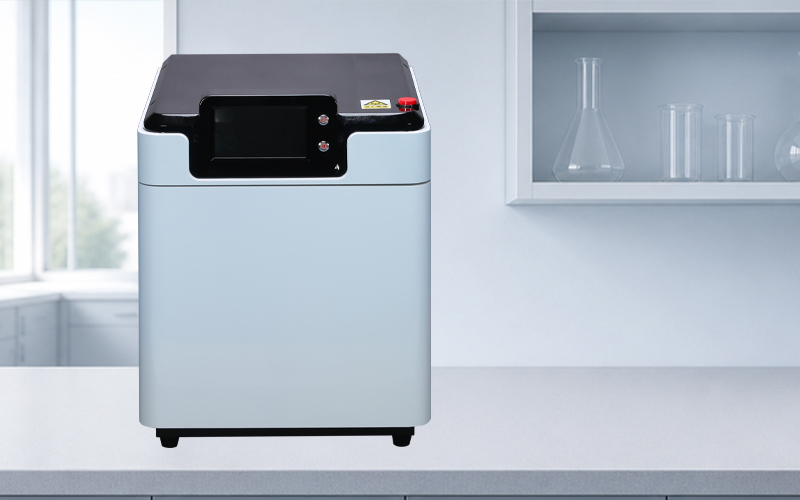
Welso WMD600 Microwave Digestion System
Acid digestion heating block
Analytical balance (0.1 mg readability)
Digestion vessels and associated laboratory equipment
Reagents
Nitric acid (HNO₃, 68%)
Sulfuric acid (H₂SO₄, 98%)
Laboratory-grade water
3. Experimental Procedures
Three types of carbon fiber samples were selected for digestion condition evaluation. Different acid systems and microwave digestion programs were applied to compare their digestion performance.
Method 1: Microwave Digestion Using a Nitric Acid System
Accurately weigh approximately 0.1 g of carbon fiber sample, with a weighing precision of 0.1 mg, and place it at the bottom of the digestion vessel.
Add 10 mL of nitric acid and allow the sample to stand for approximately 5 minutes to ensure sufficient contact between the sample and the reagent. Assemble the digestion vessel and perform microwave digestion according to the preset program.
After digestion, allow the vessel to cool to below 60°C. Transfer it to a fume hood and carefully open the vessel.
Place the digestion solution on an acid digestion heating block and heat at 150°C until the volume is reduced to approximately 0.5 mL. Transfer the solution to a beaker and dilute with an appropriate amount of laboratory-grade water.
Observation: The resulting digestion solution was clear and transparent, and the sample was completely dissolved. This indicates that the nitric acid digestion conditions were suitable for the carbon fiber sample tested under this procedure.
Method 2: Optimized Microwave Digestion Using a Nitric Acid System
While maintaining the same sample mass and nitric acid volume, the microwave digestion program was adjusted to further investigate the influence of digestion conditions on sample treatment performance.
Accurately weigh approximately 0.1 g of carbon fiber sample, with a weighing precision of 0.1 mg. Add 10 mL of nitric acid and allow the sample to stand for approximately 5 minutes before assembling the digestion vessel.
Perform microwave digestion using the optimized program. After digestion, allow the vessel to cool to below 60°C before carefully opening it in a fume hood.
Heat the digestion solution at 150°C until the volume is reduced to approximately 0.5 mL. Transfer the solution to a beaker and dilute with water.
Observation: The digestion solution was clear and transparent, and the sample was completely dissolved. The results indicate that adjusting the microwave digestion program can help identify suitable pretreatment conditions for different carbon fiber samples.
Method 3: Microwave Digestion Using a Nitric Acid–Sulfuric Acid Mixture
For samples that cannot be adequately digested using a conventional nitric acid system, a mixed acid system containing nitric acid and sulfuric acid can be further investigated.
Accurately weigh approximately 0.1 g of carbon fiber sample, with a weighing precision of 0.1 mg, and place it at the bottom of the digestion vessel.
Add 2 mL of sulfuric acid followed by 6 mL of nitric acid. Allow the sample to stand for approximately 10 minutes before assembling the digestion vessel.
Perform microwave digestion according to the specified program.
After digestion, allow the vessel to cool to below 60°C. Carefully open it in a fume hood and process and dilute the digestion solution according to the requirements of the subsequent analytical method.
Observation: The digestion solution was clear and transparent, and the sample was completely dissolved. This indicates that the mixed acid system was applicable to the carbon fiber sample tested under this procedure.
4. Results and Discussion
Three types of carbon fiber samples were digested using nitric acid and nitric acid–sulfuric acid systems. Under the experimental conditions evaluated, all three samples were completely dissolved, producing clear and transparent digestion solutions.
4.1 Nitric Acid Digestion for Conventional Carbon Fiber Samples
The experimental results showed that conventional carbon fiber samples could be completely dissolved using a nitric acid system at 210°C.
For samples that are not sufficiently digested, the digestion temperature can be further increased to 220°C as part of the optimization process.
4.2 Mixed Acid Systems for Further Optimization
When nitric acid alone does not achieve the desired digestion performance, sulfuric acid may be introduced to adjust the acid system.
Sulfuric acid has a relatively high boiling point and different chemical properties from nitric acid. However, its use can increase the complexity of subsequent digestion solution processing.
Therefore, the acid system should be selected according to the sample characteristics and the requirements of the subsequent analytical method.
4.3 Improving Sample Preparation Efficiency Through Microwave Digestion
The Welso WMD600 Microwave Digestion System provides programmable control over the digestion process, allowing adjustable digestion conditions for carbon fiber samples.
By optimizing the acid composition, digestion temperature, and program parameters, suitable pretreatment procedures can be developed for different types of carbon fiber samples. The resulting clear digestion solutions can then be used for subsequent multi-element analysis.
It should be noted that a clear digestion solution and complete sample dissolution do not, by themselves, demonstrate complete recovery of the target metal elements. For quantitative analysis, the accuracy and applicability of the method should be verified through reagent blanks, spike recovery tests, and certified reference material analysis, where appropriate.
5. Experimental Precautions
Control the Sample Mass
The sample mass used in this experiment was approximately 0.1 g. Carbon fiber digestion may generate considerable pressure. Before increasing the sample mass, carefully evaluate the pressure limits of the digestion vessels, the acid system, and the instrument's safety requirements.
Use Mixed Acid Systems Properly
Sulfuric acid has a high boiling point and cannot be completely removed under conventional acid evaporation conditions. When using a sulfuric acid system, evaluate the potential effects of residual sulfuric acid on subsequent measurements.
Ensure Adequate Cooling Before Opening the Vessels
After digestion, allow the vessels to cool to below 60°C before carefully opening them in a fume hood. This helps minimize risks associated with high temperatures, pressure, and acid vapors.
Select an Appropriate Pretreatment Method
If a larger sample quantity needs to be processed, alternative pretreatment methods, such as acid leaching, may be considered according to the characteristics of the carbon fiber sample. The extraction efficiency and suitability of the analytical results should be verified.
Verify Analytical Accuracy
For trace metal analysis, reagent blanks, parallel samples, and spike recovery tests are recommended. Certified reference materials should be used for method validation where appropriate.
In this study, the Welso WMD600 Microwave Digestion System was used to investigate microwave digestion conditions for different types of carbon fiber samples.
The results showed that all three tested sample types could be completely dissolved under their respective experimental conditions. The nitric acid system was suitable for conventional carbon fiber samples, while a nitric acid–sulfuric acid mixed system could be further investigated for samples that did not achieve satisfactory digestion using nitric acid alone.
By selecting an appropriate acid system and optimizing the digestion program, microwave digestion provides an effective sample pretreatment approach for the multi-element analysis of carbon fiber materials.
The Welso WMD600 Microwave Digestion System can be used to explore microwave digestion conditions for carbon fiber and other material samples, supporting laboratory workflows for material characterization and related analytical applications.
Note: The experimental observations and results described in this article apply only to the samples and conditions evaluated in this study. Actual applications should be validated according to the sample type, target elements, and subsequent analytical method.



Email: info@welsobio.com
Tel: +86 21 51096910
Head Office: No. 439 Jinglian Road, Minhang District, Shanghai,China, 201108
Branch: 1-1009, National Industrial Design Park, No. 599 Jianzhu Road, Binhu, Wuxi , Jiangsu, China, 214062

Follow official account