
Efficient and Safe Concentration of Organic Solvents
When concentrating organic solvents such as trifluoroacetic acid (TFA), conventional evaporation methods often face two major challenges: corrosive solvents can damage equipment, while heat-sensitive samples such as peptides may lose activity under high temperatures. A corrosion-resistant vacuum centrifugal concentrator provides an ideal solution by enabling rapid solvent removal under low-temperature and low-pressure conditions.
How a Vacuum Centrifugal Concentrator Works
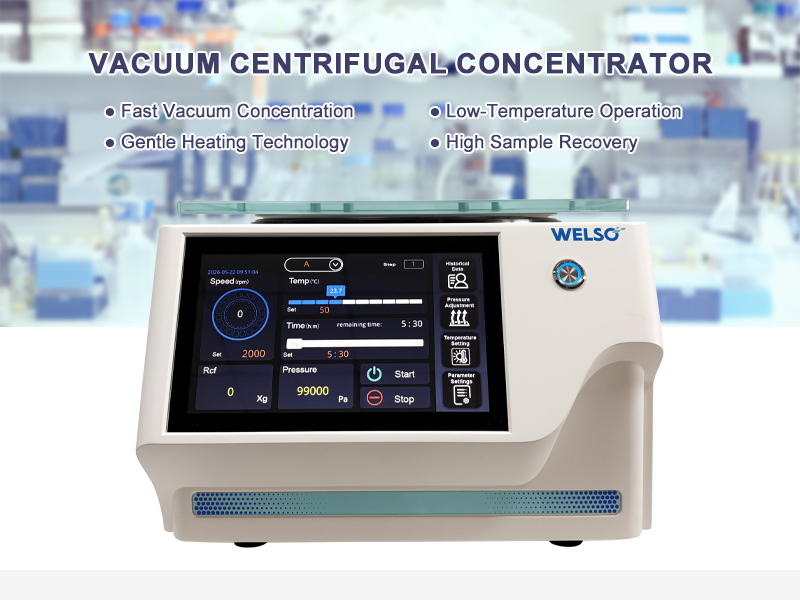
A vacuum centrifugal concentrator combines vacuum, centrifugal force, and controlled heating to achieve fast and gentle sample concentration.
Vacuum lowers the boiling point of the solvent, allowing evaporation at lower temperatures.
Centrifugal force keeps samples at the bottom of the tubes, preventing bumping, cross-contamination, and sample loss.
Low-temperature cold trap condenses solvent vapor before it reaches the vacuum pump, protecting the pump from corrosive vapors and extending its service life.
Precise temperature control helps preserve the biological activity of heat-sensitive samples while reducing oxidation.
This concentration method is widely used for proteins, peptides, nucleic acids, metabolites, pharmaceuticals, and other biological or chemical samples.
Typical Experimental Procedure
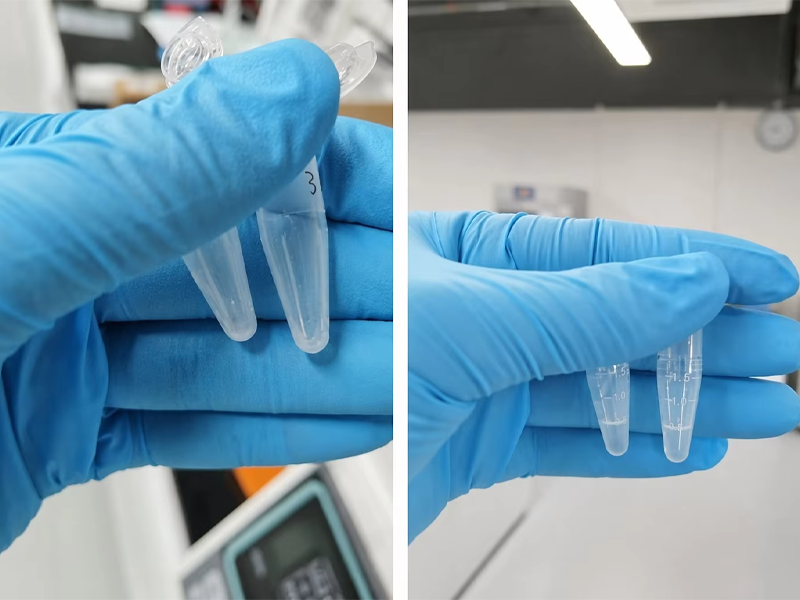
In this application, a corrosion-resistant vacuum centrifugal concentrator was used to concentrate peptide samples dissolved in trifluoroacetic acid.
Recommended operating conditions:
Equipment: Corrosion-resistant vacuum centrifugal concentrator
Cold trap temperature: -50°C
Vacuum source: Chemical-resistant diaphragm pump
Chamber temperature: 25°C
Centrifugal speed: 1200 rpm
Running time: 2 hours
Sample volume: 100 μL in a 2 mL centrifuge tube
Before starting the run, pre-cool the cold trap, preheat the chamber, balance all sample tubes, and then begin the concentration process. After completion, the concentrated samples are ready for downstream analysis.
Best Practices
To ensure reliable results and protect the instrument:
Keep the sample volume below half of the centrifuge tube capacity to prevent bumping.
Always balance sample tubes before centrifugation.
Wear protective gloves when handling corrosive solvents.
Start the concentration only after the cold trap reaches the target temperature.
Why Choose the Welso Vacuum Centrifugal Concentrator?
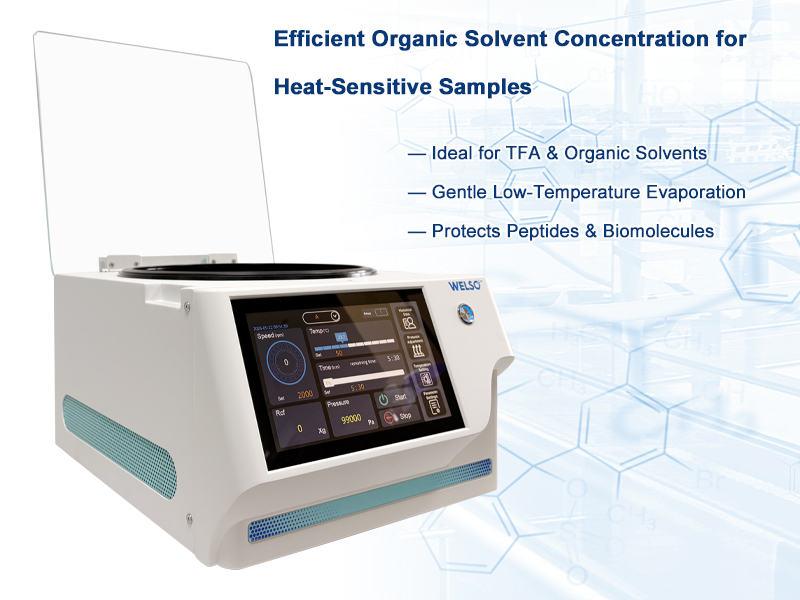
The Welso Vacuum Centrifugal Concentrator is specifically designed for laboratories working with corrosive organic solvents and temperature-sensitive samples.
Key advantages include:
Excellent corrosion resistance for acidic and organic solvents
Gentle low-temperature concentration to protect sample activity
Integrated vacuum, centrifugation, and heating for higher efficiency
Low-temperature cold trap protects the vacuum pump and improves system reliability
Suitable for peptide, protein, nucleic acid, pharmaceutical, and chemical sample preparation
Whether used in life science research, pharmaceutical development, analytical chemistry, or molecular biology, the Welso Vacuum Centrifugal Concentrator delivers efficient, safe, and reproducible sample concentration while preserving sample integrity.



Email: info@welsobio.com
Tel: +86 21 51096910
Head Office: No. 439 Jinglian Road, Minhang District, Shanghai,China, 201108
Branch: 1-1009, National Industrial Design Park, No. 599 Jianzhu Road, Binhu, Wuxi , Jiangsu, China, 214062

Follow official account