
When evaluating a laboratory centrifuge, most users focus on parameters such as maximum speed, rotor capacity, temperature control, and safety systems. However, one often-overlooked component plays a critical role in performance, safety, noise reduction, and sealing reliability—the centrifuge lid.
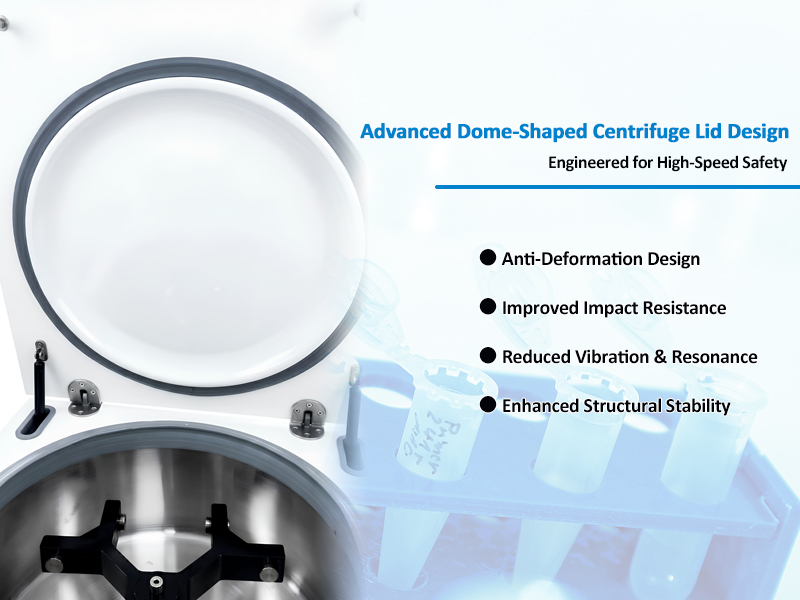
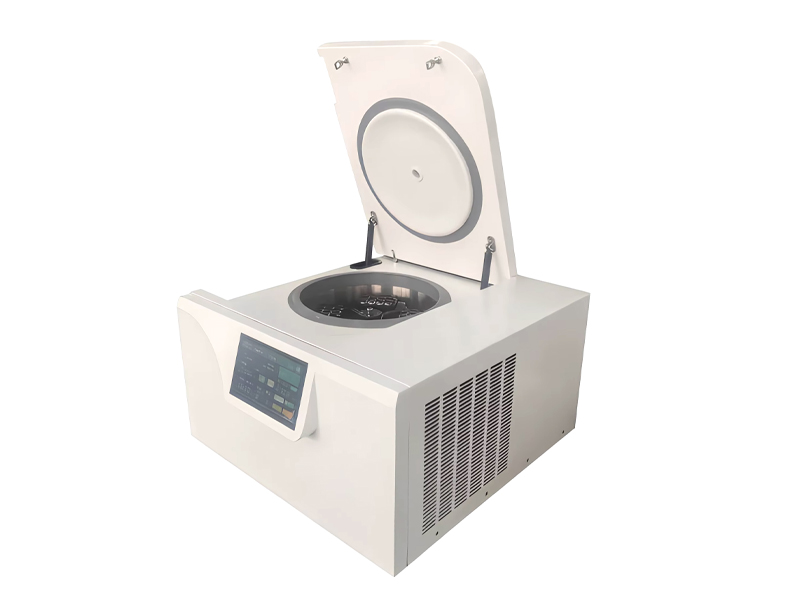
Many modern centrifuges adopt a specially engineered lid structure featuring a raised dome-shaped center with a recessed peripheral ring (annular groove). While this design may appear simple, it provides significant mechanical, aerodynamic, thermal, and safety advantages compared with traditional flat lids.
This article explains why advanced centrifuge manufacturers increasingly use dome-shaped centrifuge lids and how this design improves overall centrifuge performance.
What Is a Dome-Shaped Centrifuge Lid?
A dome-shaped centrifuge lid consists of:
A raised central section extending inward toward the centrifuge chamber
A recessed perimeter forming an annular groove
Integrated sealing and reinforcement structures
This geometry creates a highly rigid lid assembly that improves strength, airflow management, sealing performance, and internal space utilization.
How Does a Dome-Shaped Lid Improve Centrifuge Safety and Structural Strength?
High-speed centrifuges generate substantial centrifugal forces, pressure fluctuations, and airflow turbulence inside the chamber. A conventional flat lid can be more susceptible to vibration, deformation, and stress concentration.
The dome-shaped design offers several mechanical advantages:
Better Stress Distribution
The curved surface distributes mechanical loads more evenly across the lid, reducing localized stress concentration that could lead to fatigue or cracking.
Higher Structural Rigidity
The recessed peripheral groove acts as a circumferential reinforcement rib, significantly increasing overall stiffness and resistance to deformation.
Improved Impact Resistance
During high-speed operation, sudden airflow pressure changes and rotor-generated forces place continuous stress on the lid. The dome structure provides enhanced resistance to:
Mechanical deformation
Structural fatigue
High-pressure impacts
Vibration-induced damage
Enhanced Operational Safety
Because the lid is less prone to flexing or resonating, the locking mechanism remains more stable during operation, improving overall centrifuge safety.
Can the Lid Design Reduce Centrifuge Noise?
Yes. One of the major advantages of a dome-shaped centrifuge lid is improved airflow management.
Optimized Airflow Path
As the rotor spins, it generates strong air circulation inside the chamber. The curved inner surface guides airflow smoothly from the center toward the annular groove and then outward through designated airflow channels.
This creates a controlled airflow pattern that:
Reduces turbulent airflow
Minimizes vortex formation
Lowers aerodynamic resistance
Suppresses airflow-induced whistling noise
Lower Noise Levels
Many centrifuge systems using optimized airflow structures can achieve noise reductions of approximately 3–8 dB compared with conventional flat-lid designs.
Benefits include:
Quieter laboratory environments
Improved user comfort
Reduced operator fatigue during long experimental runs
How Does the Lid Improve Heat Dissipation in Non-Refrigerated Centrifuges?
Heat generation is unavoidable during centrifugation, particularly at higher speeds.
The dome-shaped lid helps create a circular airflow channel between the lid and centrifuge chamber.
Efficient Cooling Airflow
The rotating rotor continuously drives air through this airflow path:
Rotor Rotation → Dome Surface → Annular Groove → Air Outlet
This circulation helps:
Remove accumulated heat
Improve air exchange efficiency
Reduce chamber temperature rise
Protect temperature-sensitive samples
More Stable Operating Conditions
Better heat dissipation contributes to:
More consistent centrifugation results
Reduced thermal stress on samples
Extended component lifespan
Why Is This Design Beneficial for Refrigerated Centrifuges?
For refrigerated centrifuges, sealing performance is particularly important.
Improved Seal Compression
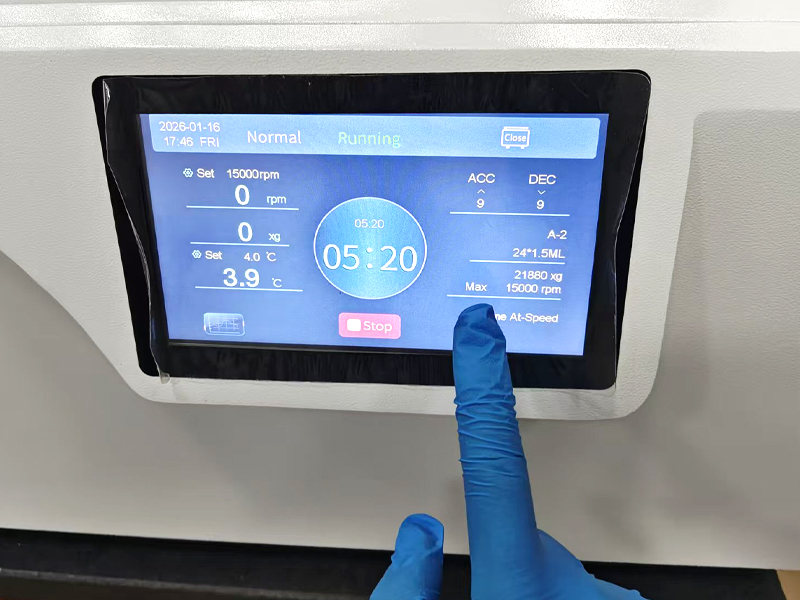
The annular groove provides an ideal location for the sealing gasket.
Advantages include:
Uniform gasket compression
Better airtightness
Reduced leakage risk
Improved temperature retention
Prevention of Aerosol Escape
Biological samples may generate aerosols during centrifugation.
The enhanced sealing structure helps:
Minimize aerosol leakage
Reduce contamination risks
Protect laboratory personnel
Improve biosafety performance
Liquid Containment Protection
If a sample tube leaks or breaks, the dome-shaped inner surface directs liquid toward the chamber walls and collection areas rather than allowing it to spill outward.
This helps:
Prevent external contamination
Simplify cleaning procedures
Improve laboratory safety

Can a Dome-Shaped Lid Increase Rotor Capacity?
Yes.
One clever advantage of the inward-projecting dome structure is improved utilization of internal space.
Greater Vertical Clearance
The raised center provides additional chamber height without increasing the external dimensions of the centrifuge.
This allows accommodation of:
Taller rotors
Larger-angle rotors
Longer centrifuge tubes
Higher-capacity buckets
Compact Instrument Design
Manufacturers can offer larger working capacities while maintaining:
Smaller footprints
Compact benchtop designs
Better laboratory space efficiency
Does the Lid Structure Improve Door Alignment and Locking Reliability?
Absolutely.
The combination of the dome-shaped center and annular groove naturally creates a self-centering effect during lid closure.
Automatic Alignment
As the lid closes:
The structure helps guide the lid into position
The sealing gasket remains properly aligned
Closing becomes smoother and easier
More Stable Locking
Because force is distributed more evenly:
Lock engagement becomes more reliable
Uneven seal pressure is minimized
Risk of accidental opening is reduced
This is especially important for high-speed centrifuges where vibration resistance is critical.

Key Benefits of Dome-Shaped Centrifuge Lids
Modern dome-shaped centrifuge lid designs provide multiple performance advantages:
● Enhanced structural strength and impact resistance
● Improved high-speed operational safety
● Reduced vibration and resonance
● Lower operating noise levels
● Better airflow and heat dissipation
● Superior sealing performance
● Reduced aerosol leakage risk
● Improved contamination control
● Increased usable chamber space
● More reliable lid alignment and locking
● Compact instrument footprint with larger capacity options
The centrifuge lid is far more than a simple cover. Its structural design directly influences safety, noise control, airflow efficiency, sealing performance, and rotor compatibility.
By incorporating a dome-shaped center and reinforced annular groove structure, modern centrifuges achieve higher levels of safety, quieter operation, improved thermal management, superior sealing, and better space utilization. As laboratory requirements continue to evolve toward higher speeds, larger capacities, and stricter biosafety standards, advanced centrifuge lid engineering has become an important factor in overall centrifuge performance and reliability.
When selecting a centrifuge, evaluating the lid structure can provide valuable insight into the instrument's engineering quality, long-term durability, and operational safety.



Email: info@welsobio.com
Tel: +86 21 51096910
Head Office: No. 439 Jinglian Road, Minhang District, Shanghai,China, 201108
Branch: 1-1009, National Industrial Design Park, No. 599 Jianzhu Road, Binhu, Wuxi , Jiangsu, China, 214062

Follow official account