
Resins are a class of organic polymer compounds that typically soften or melt when heated and exhibit flow characteristics under external force. At room temperature, they may exist as solids, semi-solids, or liquids. Broadly speaking, any polymer or prepolymer that can be used as a raw material for plastic products can be classified as a resin.
According to their origin, resins can be divided into natural resins and synthetic resins. Based on their thermal behavior, they are further classified into thermoplastic and thermosetting resins. Resins are widely used in industries such as chemicals, electronics, food packaging, environmental protection, renewable energy, and pharmaceuticals. The determination of heavy metal content in resin materials is essential for quality control, regulatory compliance, and product safety evaluation.
Due to their high organic content and complex molecular structures, resin samples can be challenging to decompose completely using conventional wet digestion methods. Traditional digestion techniques often require large volumes of reagents, lengthy processing times, and may result in analyte loss. Microwave digestion offers a superior alternative by providing rapid, efficient, and complete sample decomposition while minimizing reagent consumption and contamination risks. The Welso Microwave Digestion System provides an ideal sample preparation solution for the analysis of trace and heavy metal elements in various resin materials.
Instruments and Reagents
Instruments
Welso Microwave Digestion System
Welso Graphite Acid Evaporation System
Analytical balance (0.1 mg readability)
PTFE digestion vessels
Volumetric flasks and laboratory accessories
Reagents
Nitric acid (HNO₃, 68%)
Hydrogen peroxide (H₂O₂, 30%)
Hydrofluoric acid (HF, 40%)
Ultrapure water
Experimental Procedures
1. Natural Resin
Natural resins are obtained from plants, animals, or natural mineral sources. Plant resins are commonly secretions from trees such as pine and peach trees, while animal-derived resins are represented by shellac. Depending on their formation process, natural resins can be categorized into fossil resins and modern resins.
Sample Preparation
Accurately weigh 0.2 g of sample (±0.1 mg) into the digestion vessel and add:
8 mL nitric acid
2 mL hydrogen peroxide
Allow the mixture to pre-react for approximately 10 minutes before sealing the digestion vessel.
Microwave Digestion Program
Stage | Temperature (°C) | Hold Time (min) |
1 | 150 | 5 |
2 | 180 | 5 |
3 | 200 | 30 |
Digestion Results
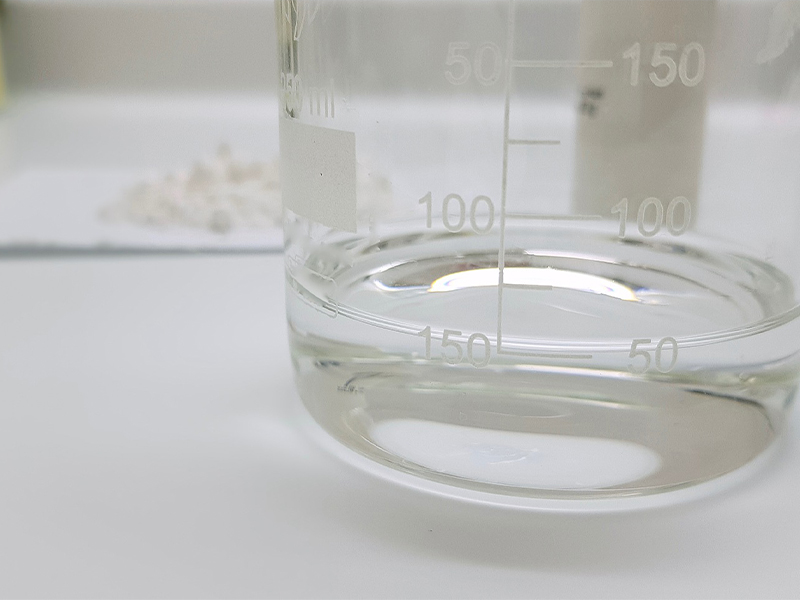
After digestion, allow the vessels to cool to below 60°C. Carefully open the vessels in a fume hood and evaporate the solution at 150°C until less than 1 mL of liquid remains. Transfer the solution to a volumetric flask and dilute to volume with ultrapure water. The final digest is clear and transparent, indicating complete sample decomposition.
2. Ion Exchange Resin
Ion exchange resins are insoluble polymer materials containing ion-exchange functional groups within a cross-linked network structure. They are widely used in water treatment, food processing, and pharmaceutical industries.
Sample Preparation
Accurately weigh 0.1 g of sample (±0.1 mg) into the digestion vessel and add:
8 mL nitric acid
1 mL hydrogen peroxide
Allow the mixture to stand for approximately 10 minutes before digestion.
Microwave Digestion Program
Stage | Temperature (°C) | Hold Time (min) |
1 | 150 | 2 |
2 | 180 | 2 |
3 | 210 | 40 |
Digestion Results
After cooling, carefully vent the vessels and evaporate the digest at 150°C until nearly dry. Dilute to volume with ultrapure water. A clear, transparent solution is obtained, indicating complete digestion of the resin sample.
3. Terpene Resin
Terpene resins are thermoplastic materials known for their light color, low odor, excellent adhesion, oxidation resistance, and thermal stability. They are commonly used as tackifiers in EVA, SIS, and SBS hot-melt adhesive systems.
Sample Preparation
Accurately weigh 0.1 g of sample (±0.1 mg) into the digestion vessel and add:
8 mL nitric acid
1 mL hydrogen peroxide
1 mL hydrofluoric acid
Allow the mixture to pre-react for approximately 15 minutes before sealing the vessel.
Microwave Digestion Program
Stage | Temperature (°C) | Hold Time (min) |
1 | 150 | 5 |
2 | 180 | 5 |
3 | 210 | 60 |
Digestion Results
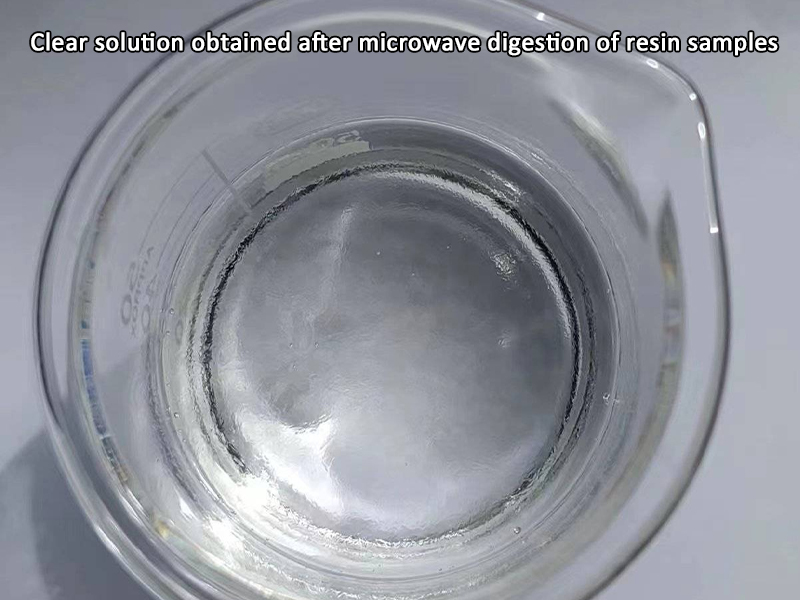
After digestion and cooling, carefully open the vessels in a fume hood. Following acid evaporation and dilution, the resulting solution is clear and transparent with no visible residue, demonstrating complete sample dissolution.
Results and Discussion
Three representative resin samples—natural resin, ion exchange resin, and terpene resin—were evaluated using microwave digestion.
The results showed that:
Natural resin and ion exchange resin can be completely digested using a nitric acid and hydrogen peroxide system.
Terpene resin requires the addition of hydrofluoric acid to achieve complete decomposition.
All samples were fully digested at a maximum temperature of 210°C.
No significant residue or carbonization was observed after digestion.
The resulting solutions were suitable for subsequent elemental analysis by ICP-OES, ICP-MS, AAS, and other analytical techniques.
These results demonstrate the excellent performance of the Welso Microwave Digestion System in the preparation of high-organic-content resin samples for elemental analysis.
Precautions
1. Hydrofluoric Acid Must Be Removed After Digestion
Samples digested with hydrofluoric acid require an acid evaporation step to remove residual HF. This prevents corrosion of glass laboratory ware and minimizes interference during elemental analysis.
2. Control Sample Loading
Resin samples contain a high proportion of organic material and can generate significant pressure during digestion. If larger sample masses are required, pre-treatment or staged sample addition is recommended to ensure safe operation.
3. Allow Adequate Pre-Reaction Time
A pre-reaction period of 10–15 minutes after adding acids is recommended to reduce vigorous reactions during microwave heating and improve digestion stability.
4. Select an Appropriate Acid System
Because resin compositions vary significantly, the digestion acid system should be optimized according to sample characteristics to achieve the best digestion efficiency and elemental recovery.
Conclusion
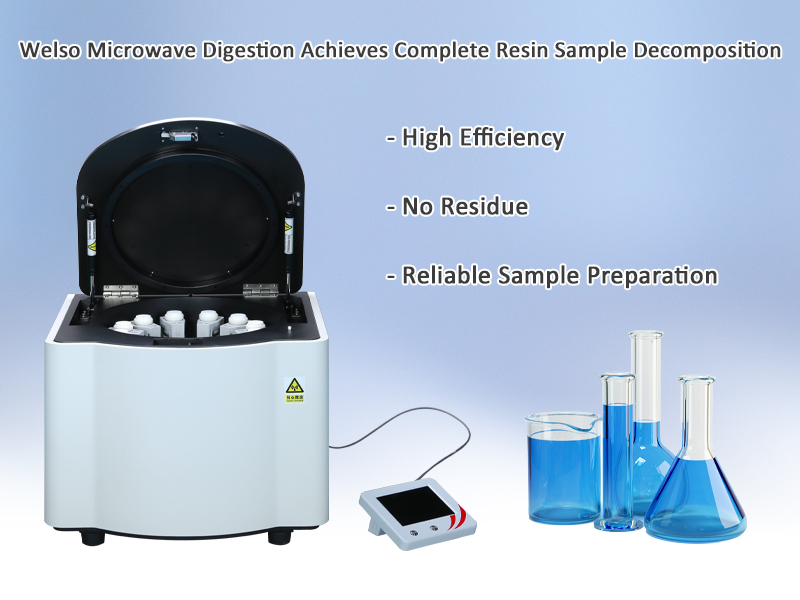
The Welso Microwave Digestion System provides an efficient and reliable solution for the digestion of resin materials. By selecting suitable reagent systems and digestion programs, natural resins, ion exchange resins, and terpene resins can all be completely decomposed for subsequent elemental analysis.
Compared with conventional digestion methods, microwave digestion offers faster processing, lower reagent consumption, reduced contamination risk, and higher elemental recovery. It is an ideal sample preparation technique for heavy metal determination and quality control analysis of resin-based materials across a wide range of industries.



Email: info@welsobio.com
Tel: +86 21 51096910
Head Office: No. 439 Jinglian Road, Minhang District, Shanghai,China, 201108
Branch: 1-1009, National Industrial Design Park, No. 599 Jianzhu Road, Binhu, Wuxi , Jiangsu, China, 214062

Follow official account