
I. Background and Objective
Microalgae, as a typical class of microbial samples, play an important role in nucleic acid and protein extraction studies. However, due to their dense cell wall structure and high mechanical strength, conventional disruption methods often fail to achieve complete cell lysis, which directly affects the yield and concentration of downstream DNA, RNA, and protein extraction.
In this experiment, the sample consisted of liquid microalgae suspension. Efficient cell disruption was required under low-temperature conditions to prevent RNA degradation and protein denaturation. Traditional ultrasonic disruption showed limited effectiveness even after prolonged processing and was associated with rapid temperature rise, low efficiency, and poor reproducibility.
After comparing various sample preparation methods, the Welso Fully Automatic High-Speed Tissue Grinder was selected. By combining high-frequency mechanical oscillation with cryogenic-compatible operation, the system enables efficient and stable disruption of rigid microalgal cell walls, providing an ideal pretreatment solution for high-quality nucleic acid and protein extraction.
II. Instrument
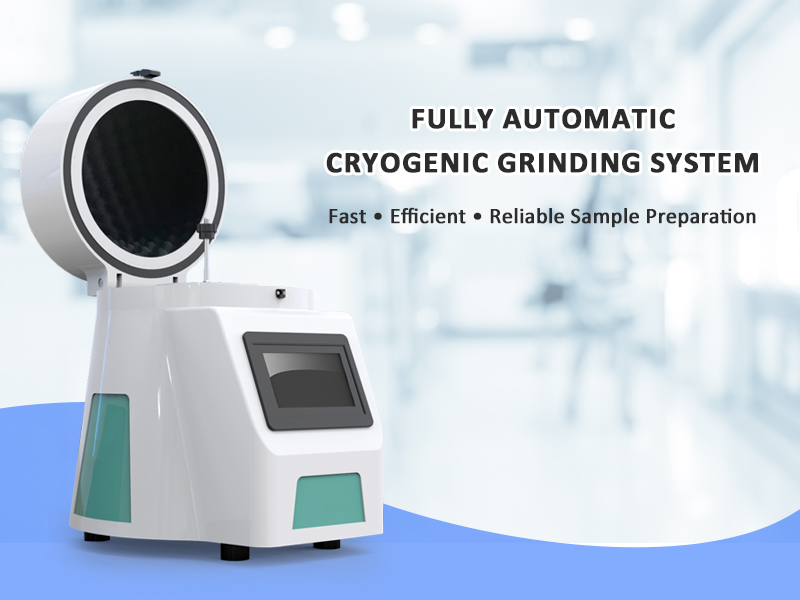
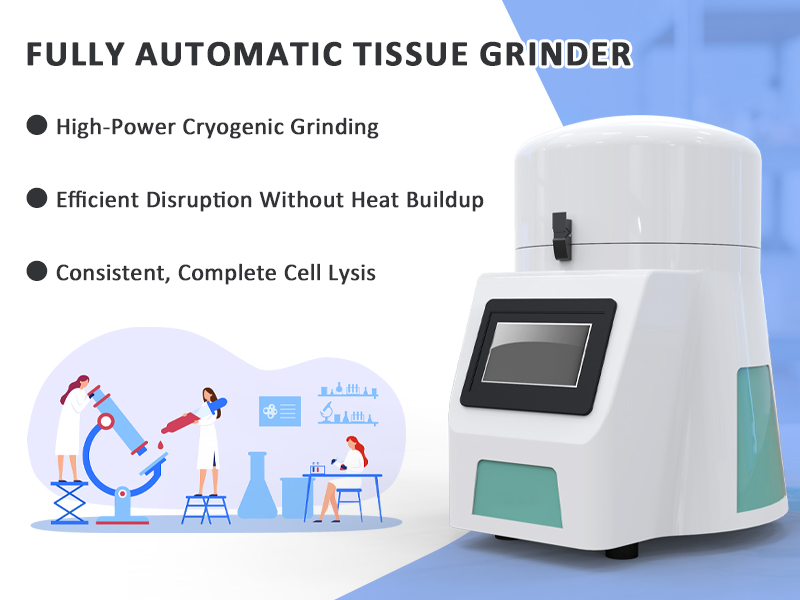
Welso Fully Automatic High-Speed Tissue Grinder
This instrument features high-frequency oscillation, batch processing capability, and excellent low-temperature compatibility. It is suitable for rapid and uniform homogenization of microorganisms, plant tissues, and other high-toughness samples.
III. Materials and Configuration
2 mL × 24-position metal adapter × 1 set
2 mL grinding tubes
Zirconia Grinding Beads (multi-size combination):
0.1 mm
0.5 mm
1 mm
2 mm
IV. Experimental Procedure
1. Adapter Pre-cooling
Place the metal adapter in a −80 °C freezer for 5 minutes prior to use.
For frequent experiments, the adapter may be stored directly in a −20 °C freezer after use to facilitate the next operation.
2. Sample Preparation
Transfer an appropriate volume of microalgae suspension into a 2 mL grinding tube. Add a suitable combination of zirconia beads of different sizes according to sample characteristics, then tightly secure the tube cap.
3. Sample Loading
Install the pre-cooled metal adapter onto the grinder spindle, ensuring that the adapter base is fully engaged with the drive shaft slot.
Insert the grinding tubes symmetrically and evenly into the adapter to maintain proper balance.
4. Adapter Fixation
Cover the adapter with the pressure cap and tighten the fixing nut, ensuring that the adapter remains in a horizontal position.
5. Parameter Setting and Grinding
Frequency: 70 Hz
Grinding time: 60 s
Interval time: 20 s
Cycles: 4
Parameters may be adjusted according to microalgae species, sample volume, and experimental requirements.
Once the settings are confirmed, start the grinding program.
6. Sample Collection
After completion, open the instrument and remove the grinding tubes. The samples are then ready for direct nucleic acid or protein extraction.
V. Notes
Different microalgae species vary in cell wall composition and mechanical strength. It is recommended to optimize bead size combinations and operating parameters to achieve optimal disruption efficiency.
Grinding tubes must be loaded symmetrically to ensure proper balance and prevent uneven loading, which may affect grinding performance and instrument stability.
If parameter selection is uncertain, users may consult Welso technical support or sales representatives for professional guidance.
VI. Performance Evaluation
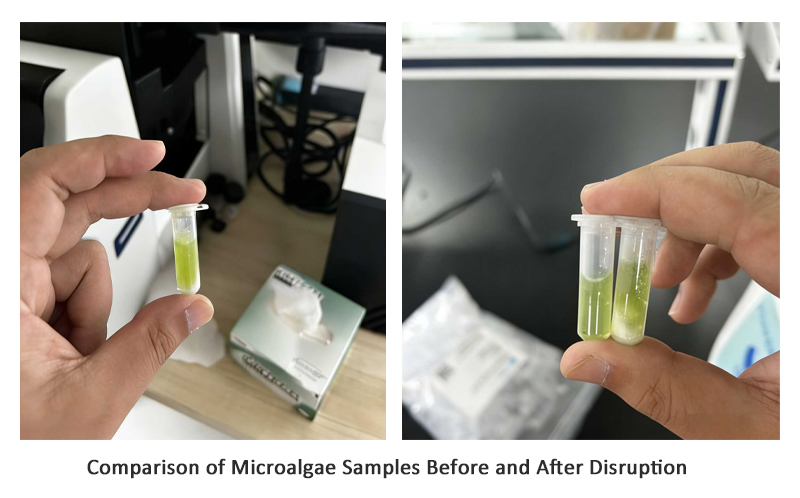
Microscopic observation showed that after 240 seconds of processing with the Welso Fully Automatic High-Speed Tissue Grinder, microalgal cell structures were thoroughly disrupted, with cell walls almost completely lysed and significantly improved sample homogeneity.
Compared with traditional ultrasonic disruption methods, this approach demonstrates:
✔ Higher disruption efficiency
✔ Significantly reduced processing time
✔ Improved reproducibility under low-temperature conditions
✔ Superior suitability for batch sample processing
This solution effectively overcomes the technical challenges of “difficult cell wall disruption and rapid temperature rise” in microalgae processing. It provides a reliable pretreatment method for high-quality nucleic acid and protein extraction, greatly enhancing laboratory efficiency, and represents an ideal choice for microalgae and other high-toughness microbial samples.



Email: info@welsobio.com
Tel: +86 21 51096910
Head Office: No. 439 Jinglian Road, Minhang District, Shanghai,China, 201108
Branch: 1-1009, National Industrial Design Park, No. 599 Jianzhu Road, Binhu, Wuxi , Jiangsu, China, 214062

Follow official account