
In laboratory analysis and quality control, electronic balances are essential instruments for achieving high-precision weighing. Different applications require varying levels of accuracy, stability, and functionality. Therefore, before selecting an electronic balance, it is crucial to systematically understand its key technical parameters. As a professional laboratory equipment supplier, Welso has summarized the following core points to support your scientific selection.
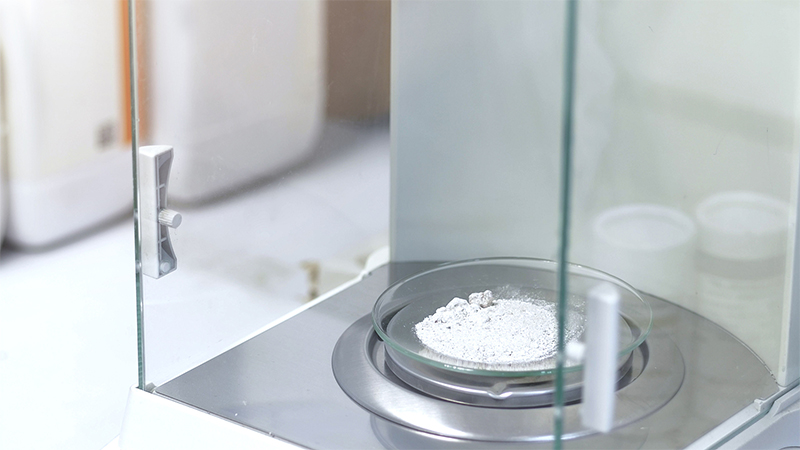
1. Capacity
Capacity refers to the maximum weighing range of an electronic balance and is generally divided into:
Single-range: The readability (precision) remains constant throughout the entire weighing range
Dual-range: Different weighing ranges correspond to different levels of precision, for example:
0–41 g: 0.01 mg
41–220 g: 0.1 mg
Key Parameters:
Maximum Capacity (Max): The highest mass value the balance can display
Minimum Capacity (Min): The smallest mass that meets accuracy requirements (actual samples should exceed this value)
2. Readability (Division Value)
Actual Division Value (d): The smallest unit the balance can display, such as 0.1 μg, 0.01 mg, or 0.01 g, which directly determines the reading precision
Verification Division Value (e): Used to classify the accuracy level of the balance, typically defined as e = 10d
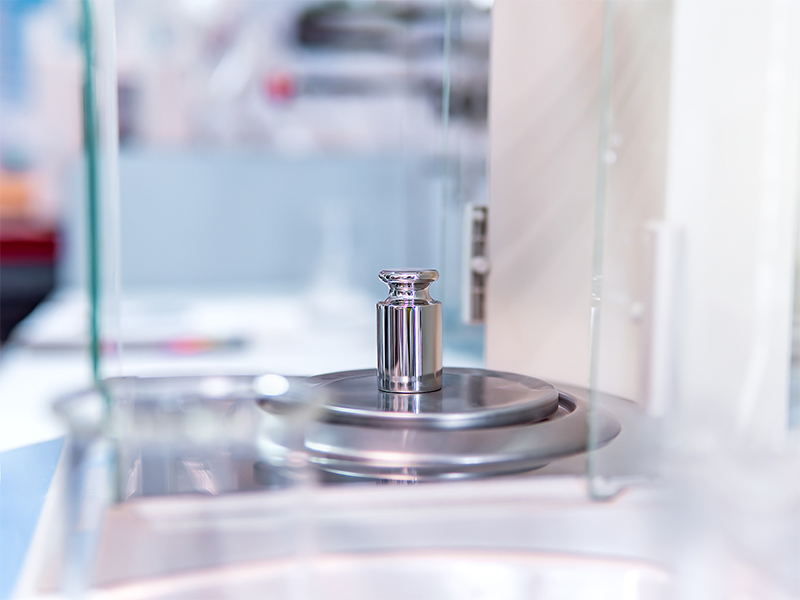
3. Repeatability
Repeatability reflects the consistency of measurement results when the same load is weighed multiple times under identical conditions. It is usually expressed as a standard deviation, such as ±0.1 mg or ±0.05 mg.
Better repeatability indicates higher stability.
4. Accuracy
Accuracy refers to how close the measured value is to the true value. Common accuracy levels include:
0.01 mg, 0.1 mg, 1 mg, 0.01 g, etc.
High-precision applications (e.g., analytical experiments) typically require higher accuracy levels.
5. Linearity
Linearity refers to the deviation of measurement results across the entire weighing range. For example:
For a balance with a 200 g capacity and a readability of 0.0001 g, if a 100 g standard weight is measured as 100.0002 g, then 0.0002 g is the linearity error.
Smaller linearity error indicates more consistent performance across the full range.
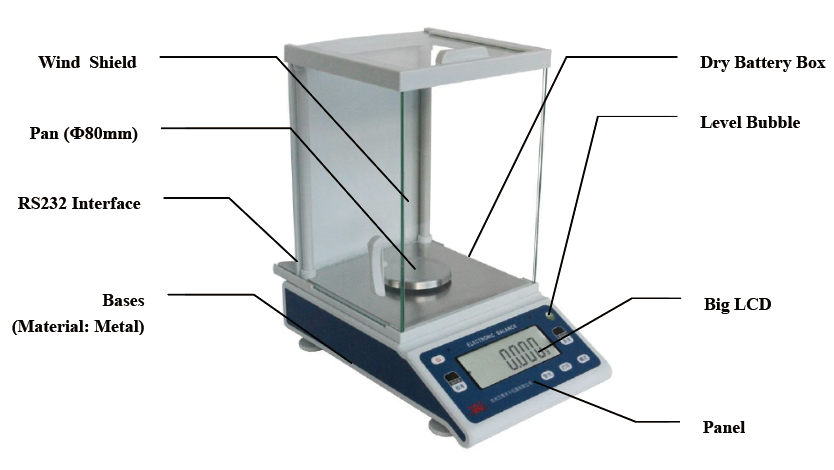
6. Eccentricity Error
Eccentricity error refers to the deviation in readings when a sample is placed at different positions on the weighing pan.
It is typically required to be within ±0.5 mg or ±1 mg to ensure consistent results between the center and edges.
7. Calibration
External Calibration
Performed manually using standard weights. It is flexible but depends on proper operation
Internal Calibration
Equipped with built-in calibration weights, allowing one-touch automatic calibration. This improves efficiency and accuracy, especially in high-frequency use scenarios
8. Environmental Conditions
Electronic balances are sensitive to environmental factors. Key considerations include:
Temperature Range: Typically 5°C–40°C; high-precision balances are recommended to operate at 20 ± 2°C
Humidity Range: Generally 25%–85% RH
A stable environment is essential for ensuring accurate weighing results.
9. Features and Expandability
Modern electronic balances offer a variety of practical functions, including:
Tare Function: Automatically subtracts the container weight
Unit Conversion: Supports multiple units such as g, mg, ct, oz
Data Output: Supports RS232, USB, Bluetooth, etc., enabling data transfer and recording
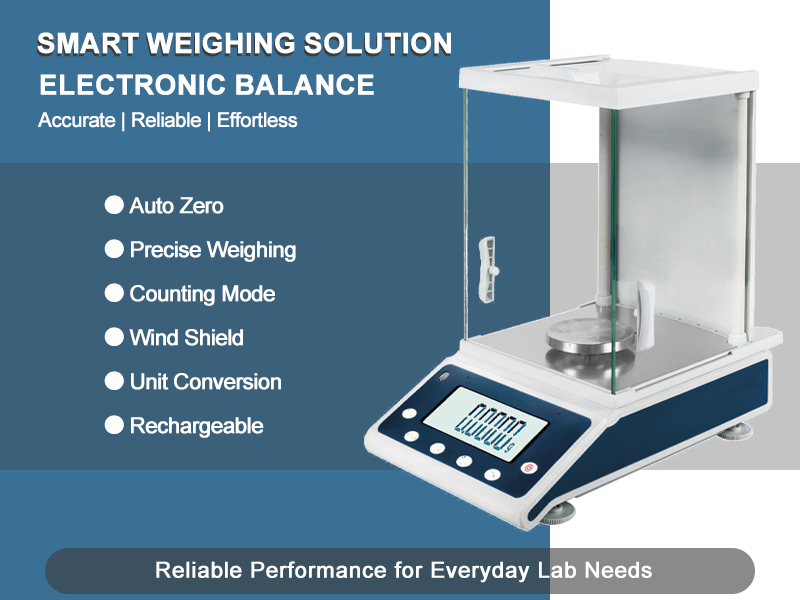
Welso Enables Precise Weighing and Enhances Laboratory Efficiency
In laboratory applications, the performance of an electronic balance directly affects data accuracy and the reliability of experimental results. By fully understanding capacity, accuracy, repeatability, and functional features, users can make more informed and appropriate selections.
Welso is dedicated to the development and supply of laboratory equipment, providing high-precision and high-stability electronic balance solutions to customers worldwide. For selection guidance or product inquiries, feel free to contact Welso—your trusted partner in precision measurement.



Email: info@welsobio.com
Tel: +86 21 51096910
Head Office: No. 439 Jinglian Road, Minhang District, Shanghai,China, 201108
Branch: 1-1009, National Industrial Design Park, No. 599 Jianzhu Road, Binhu, Wuxi , Jiangsu, China, 214062

Follow official account